
Want to Live Longer? Start with Anti-Glycation! Miller’s Team Uncovers a Shared Metabolic Signature Across 5 Longevity Models: Cut Sugar, Eat More Amino Acids!
Here’s a little fun fact first: the science of longevity research is pretty long-lived itself.
Back in 1935, McCay and colleagues first discovered that dietary restriction could extend the lifespan of rats[1]. That was more than 90 years ago. To date, at least 5 single-gene mutations, 2 dietary regimens, and 8 drugs have proven capable of lengthening mouse lifespan.
If we can pinpoint what they all have in common, we’ll unlock vital clues to the mechanisms behind longevity. The trouble? For a long time, we just couldn’t find that common thread.
Thankfully, fresh research keeps revealing overlapping metabolic traits. A recent study led by Richard Miller, a core scientist from the ITP, brings exciting new findings[2]. While different longevity interventions work through separate pathways, they trigger a similar metabolic shift in the liver: the organ switches its primary fuel source from glucose to amino acids. And glucagon is likely the key conductor behind this shift.
When it comes to aging research, sometimes you take the scenic route instead of the straight path.
At first, scientists tried a straightforward shortcut: hunting for a single protein altered across every longevity intervention. No luck—there is no master protein that controls aging for all these models[3].
Still, they didn’t come up empty-handed. While no one protein works universally, they identified a group of proteins regulated jointly by most longevity treatments. These proteins cluster tightly around one metabolic function: fatty acid oxidation. Following this lead, the team also noticed that enzymes involved in de novo lipogenesis (DNL) generally dropped in multiple slow-aging mouse models[4].
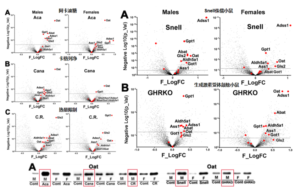
But lower de novo lipogenesis only tells part of the metabolic story. Earlier work also hinted at changes in glucose utilization. Miller’s team went on to analyze liver proteomic data from five slow-aging mouse groups: acarbose, canagliflozin, calorie restriction, Snell mice, and GHRKO mice (both Snell and GHRKO feature suppressed growth hormone/IGF‑1 signaling and live longer than wild-type controls).
Out of 4,293 proteins screened, four key glycolysis enzymes were downregulated consistently across all five groups. Meanwhile, Pck1, a critical enzyme for gluconeogenesis, went up uniformly. Oddly enough, G6pase—the enzyme responsible for pumping newly made glucose out into the bloodstream—did not show a consistent trend.
This raises a great question: if the liver is burning less sugar, what is it using for fuel?
Amino acids: stepping up to keep the TCA cycle running.
Glycolysis is held back, yet cells still need fuel to feed the tricarboxylic acid (TCA) cycle and sustain mitochondrial respiration. Which substrate fills this gap?
Amino acids. Yes, amino acids again. Beyond building proteins, several amino acids can break down to replenish TCA cycle intermediates—we’re talking about alanine, glutamine and asparagine. They feed into the AGA pathway to be catabolized and refill carbon pools for steady mitochondrial function.
When the team checked this pathway, most key enzymes in the AGA pathway trended upward across all five longevity models, with Oat protein showing a striking, consistent increase!
Even with totally different anti-aging approaches, these animals converge on this shared liver metabolic profile. The pattern did not stop here. The team tested trametinib, another lifespan-extending drug that inhibits the MEK/ERK growth signaling pathway.
Trametinib-treated mice developed the exact same liver signature: lower glycolysis enzymes and higher amino acid breakdown via the AGA pathway.
Curiously, when they treated liver cells directly with trametinib in a lab dish, this pattern disappeared. Glycolysis and AGA enzyme protein levels stayed flat, and most corresponding mRNA transcripts even trended downward.
This tells us the in-vivo metabolic shift is not triggered by direct drug action on liver cells alone. Some whole-body circulating signal is required—and glucagon emerged as a prime suspect.
Glucagon: the surprising signaling player in longevity metabolism.
Secreted by the pancreas, glucagon works opposite to insulin to balance blood sugar. When glucose drops, glucagon surges and tells the liver to produce and release glucose. It also regulates hepatic amino acid breakdown, which makes it a perfect candidate to explain the observed metabolic switch.
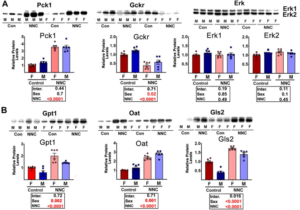
The team ran tests with NNC, a glucagon analog. In cell culture, NNC boosted Pck1 and AGA enzyme expression. After 30 days of NNC injections in live mice, their livers mirrored the longevity signature: glycolysis enzymes fell, while AGA enzymes climbed.
That proves activating glucagon signaling alone can recreate this core metabolic phenotype seen in slow-aging animals.
Next, the researchers measured endogenous glucagon in the long-lived mice. Glucagon protein, Gcg preproglucagon mRNA, and transcripts for glucagon-processing enzymes were all markedly elevated. The same pattern appeared in canagliflozin-treated mice, and the effect was stronger in males.
We already know many long-lived mouse strains feature dampened insulin/IGF‑1 signaling and better insulin sensitivity. Lower insulin naturally ramps up pancreatic glucagon output. Putting these pieces together, the team proposed a hypothesis: the insulin-glucagon axis sits at the foundation of this metabolic reprogramming shared by diverse longevity interventions.
At Xi’an Springjia, we keep a close eye on this line of research, as the balance between sugar metabolism and amino acid utilization is highly relevant to functional raw materials for healthy aging.
One nuance around glutamine deserves extra attention here.
We previously covered research showing excessive glutamine catabolism in senescent cells and aged tissues fuels pro-aging pathways; blocking this pathway can ease certain aging hallmarks.
Yet Miller’s group reports higher glutamine breakdown enzymes in the livers of long-lived mice. At first glance, the two findings look contradictory.
The contradiction melts away once you compare the context. In aged tissues, glutamine breakdown spirals out of control and drives aging via the arginine‑mTORC1 axis. In longevity models, glutamine catabolism rises moderately as a compensatory fuel source when glycolysis is suppressed—and mTOR signaling is kept low. One is pathological overactivation; the other is controlled, adaptive rewiring. Similar pathway, opposite outcomes.
Closing Thoughts
A Nature study published this September confirmed semaglutide, a GLP‑1 receptor agonist, extends lifespan and improves aging markers in aged female mice. This new Miller paper adds a critical mechanistic layer to understand why these drugs work.
Glucagon and GLP‑1 are both cleaved from the same preproglucagon precursor in different tissues, then go on to carry out distinct biological roles. Moving forward, glucagon/GLP‑1 dual agonists such as mazdutide, oral glucagon receptor agonists, and GLP‑1 analogs are all promising candidates for anti-aging research.
At Xi’an Springjia, we follow these breakthroughs closely to guide our development of premium botanical extracts and nutritional raw materials that support metabolic balance and healthy aging.