
Skin Epigenetic Age Rolled Back by 11 Years One Month After Stopping Treatment? Rubedo’s First Local Senolytic Shows Promising Safety & Age-Reversal Signals
If you follow the longevity space, you’ve probably learned to pause before sharing headlines promising “turning back the clock by a decade.” But what if the anti-aging data comes from human clinical samples — and the rejuvenation effect gets even better after treatment stops?
Biotech firm Rubedo Life Sciences recently released intriguing human clinical results for its topical candidate RLS-1496. In a trial on patients with atopic dermatitis, four weeks of local application lowered the average epigenetic age of paired skin samples by 2.1 years. One exceptional participant saw their skin epigenetic clock drop by 11.7 years, a full month after stopping the treatment.
This striking delayed result has caught wide attention across the longevity community.

Avoiding the risks of systemic senolytics
Longevity followers are familiar with senolytics — compounds that clear out harmful senescent “zombie cells.” Many early programs focused on oral or intravenous formulations to reduce the senescent cell burden across the whole body. This approach carries a major catch: senescent cells are not always bad.
During wound healing, cells can temporarily enter senescence and release repair signals that support tissue recovery. Indiscriminate removal may interfere with normal healing and damage healthy tissue. This safety hurdle has slowed many systemic senolytic programs; several well-known players including Unity Biotechnology have faced setbacks in this field.
Instead of pushing systemic delivery, Rubedo took a different path: topical, local treatment. The team started with atopic dermatitis, targeting skin as a relatively self-contained organ, and zeroed in on GPX4 (glutathione peroxidase 4).
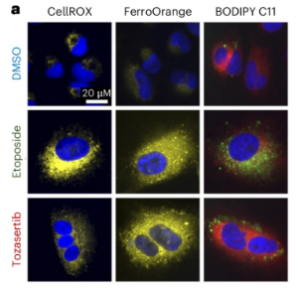
GPX4 is an antioxidant enzyme that breaks down lipid peroxides and protects cells from ferroptosis. Senescent cells build up high iron levels and severe oxidative stress. To survive, they drastically upregulate GPX4, which acts as their protective shield.
That is exactly how RLS-1496 works. This topical GPX4 modulator disables the senescent cells’ defense system. Healthy cells can tolerate this shift, but vulnerable zombie senescent cells collapse and undergo ferroptosis. Applied directly to affected skin areas, RLS-1496 acts locally and metabolizes in situ. It targets senescent cells precisely while limiting systemic exposure.
Standout clinical observations
The trial was not only looking at dermatitis symptom relief. The most remarkable findings sit at the epigenetic and tissue level. Across 11 paired skin samples after 4 weeks of topical use, average epigenetic age decreased by 2.1 years. The standout subject recorded an 11.7-year epigenetic reduction one month post-treatment.
Important note: this dramatic 11.7-year outcome is a single case observation at one time point. We cannot confirm it comes directly from ongoing tissue self-repair after stopping the drug. Even so, this result has sparked huge interest in the senolytic field.
Biopsy analysis also showed encouraging histological changes: type III collagen — often called “baby collagen,” which is hard for adult skin to produce naturally — rose by roughly 10% in treated areas. Researchers also observed reductions in some circulating inflammatory markers among participants. In a separate study on actinic keratosis (UV-related pre-cancerous skin lesions), patients saw an average 49% drop in lesion count.

Could this open a new direction for androgenetic alopecia?
Rubedo’s skin results are not limited to dermatitis. The platform may be heading toward a massive unmet need: androgenetic alopecia (AGA), common male and female pattern hair loss.
Androgens and follicle sensitivity to DHT are the classic drivers of AGA. Emerging evidence also points to premature senescence within follicles, which contributes to follicle shrinkage and miniaturization. If local GPX4 modulation works well on skin senescent cells, could it also rescue aging scalp follicles?
Rubedo shared data from an ex-vivo human hair follicle model. Researchers induced follicle atrophy with DHT, then compared RLS-1496 against finasteride, the standard treatment. At multiple tested doses, RLS-1496 significantly promoted follicle elongation. At its highest concentration, its follicle-growth effect trended stronger than finasteride.
The proposed mechanism: clearing senescent cells around the follicle resets the local microenvironment and pushes follicles back into the growth phase. Rubedo plans to launch a Phase 2a AGA clinical trial in October this year. If these ex-vivo signals translate to human scalp results, the commercial potential will be substantial.
Closing thoughts from our team
At XI’AN SPRINGJIA, we track breakthrough senescence and skin-health research closely to stay updated on next-generation raw material and formulation trends.
We have seen countless overhyped anti-aging claims, which makes this study refreshing. Rather than chasing whole-body rejuvenation immediately, Rubedo focused on local delivery, with measurable epigenetic-clock and collagen regeneration data to prove targeted senescent cell clearance can drive tissue youthfulness.
Keep the limitations in mind: RLS-1496 is still in Phase 1b with a small sample size. Its performance in upcoming hair-loss trials with more complex biology still needs solid validation.
Still, these localized senolytic strategies represent one of the most exciting directions in longevity research. Small, targeted explorations like this may deliver the next big breakthrough for skin and hair wellness.