
Eating a Bank Card’s Weight of Microplastics Every Week? Aging Triggers Invade Liver & Brain | MitoQ Interview: Cambridge-rooted Longevity Tech to Lighten Your Liver Load
When liver support comes to mind, most of us think simply of cutting back alcohol and late nights. Yet the liver bears a far heavier workload than we realise. It constantly processes exogenous substances entering our bodies — compounds absorbed via the gut, airborne chemicals, and contaminants picked up through daily contact. Microplastics stand out as one of the most stubborn hazards, forming a modern anti-ageing challenge we all must face.
WWF research estimates the average person ingests roughly 5 grams of plastic every week — equivalent to the weight of one bank card[1]. One analysis examined 47 tissue samples from human lungs, livers, spleens and kidneys, detecting microplastics in every single specimen[2]. As the frontline detox organ, the liver sustains disproportionate harm. This means our understanding of liver protection needs an urgent update.
At the 7th Timepie International Longevity Forum, Dr. Kui Xie, Head of Product Innovation at New Zealand cellular health brand MitoQ, shared insights on microplastics and human health. We were fortunate to conduct this in-depth interview with Dr. Xie during the forum.
MitoQ is a pioneering New Zealand cellular health brand built around its breakthrough targeted molecule, MitoQ® Mitoquinol. This compound was co-developed in the 1990s by founding scientists Professor Mike Murphy and Professor Robin Smith while they worked at the University of Otago, New Zealand. To date, MitoQ is backed by over 1,000 SCI papers and 29 human clinical trials worldwide, with products sold across more than 100 countries and regions.
Dr. Kui Xie holds a PhD in Biomedical Science from the University of Auckland, New Zealand, with over a decade of experience in nutrition research and product development. His work centres on mitochondrial ageing, methylation and hepatic metabolism.
In this unavoidable era of constant environmental exposure, how should we rethink liver protection?
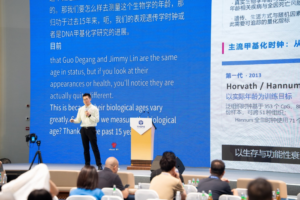
Liver Support & Longevity Need an Upgrade in the Age of Environmental Exposure
Q: You addressed environmental exposure in your forum presentation. How does this type of burden differ from liver damage caused by alcohol or medications?
A: Liver harm from traditional stressors like alcohol and pharmaceuticals operates on a completely different scale compared with microplastics.
Once alcohol or many pharmaceutical compounds are metabolised by the liver, they get eliminated from the body without lingering long-term effects. Microplastics work differently. Plastic items surround us: takeaway containers, bottled water, bubble tea cups, cling film — all shed microplastics that enter our bodies alongside food.
Crucially, these plastic fragments are extremely hard to excrete after ingestion and build up inside tissues. Multiple global studies confirm a sharp rise in microplastic accumulation in human livers and brains over the past two decades. Brain microplastic levels in Alzheimer’s patients are several times higher than those of healthy individuals[3].
Persistent deposition triggers ongoing oxidative stress and chronic inflammation. The liver burden stemming from microplastic contamination is therefore a difficult, long-term challenge[4,5].
Q: Does this mean our approach to liver care needs to evolve?
A: Exactly. Under modern environmental pressure, the liver requires deeper, more specialised, comprehensive protection — not just short-term, one-off support. This is one key reason MitoQ developed its advanced Milk Thistle Pro formula, built for dual liver defence and anti-ageing.
Hepatic detoxification happens in two phases. Phase One relies on hepatic cytochrome P450 enzymes to convert toxins into intermediate metabolites[6]. These intermediates are not always water-soluble and may remain toxic. Only after Phase Two processing — when methylation groups are attached — do they become water-soluble, ready to flush out via the urinary tract and fully relieve the liver[7].
Q: MitoQ Milk Thistle Pro features a dual-action “Mitochondria + Methylation” mechanism. Why were these two pathways selected?
A: We focused on mitochondria and methylation because sustained oxidative stress is a major driver of ageing. Mitochondria generate over 90% of the body’s endogenous oxidative stress. Neutralising this stress at its mitochondrial source delivers greater benefits for both liver health and longevity.
Methylation was chosen for its vital role in ageing and hepatic metabolism. Epigenetic methylation clocks are widely accepted tools to quantify biological age. Meanwhile, Phase Two liver detoxification is heavily methylation-dependent; supporting this pathway helps shuttle toxins out efficiently. Pairing the two creates a powerful synergistic effect for long-term defence.
30 Years of Scientific Foundation | Clinical Data Shows 15-Year Cardiovascular Age Reversal
Q: Professor Mike Murphy pioneered MitoQ’s mitochondrial-targeted antioxidant technology. How has this innovation reshaped mitochondrial medicine and ageing research?
A: In the early 1990s, while researching neurodegenerative conditions such as Alzheimer’s and Parkinson’s disease, Professor Mike Murphy identified mitochondrial oxidative stress as a core driver. This discovery led to the creation of the MitoQ targeted antioxidant platform. Its launch drew major attention from the global scientific community. Today, MitoQ is validated by more than 1,000 SCI publications and 29 human clinical trials.
Since nearly all cells contain mitochondria, MitoQ’s scope has expanded from its original focus on brain and neural protection into reproductive health, immune function and even antiviral research.
Q: Consumers now prioritise rigorous research and tangible outcomes. What standout clinical results support MitoQ?
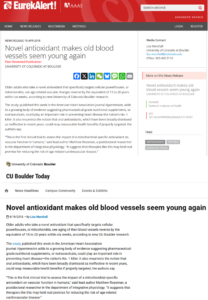
A: We have many. MitoQ’s portfolio includes over 29 published human clinical trials. The most well-known is our 2018 joint study with the University of Colorado Boulder. The trial found that regular MitoQ intake reversed markers of cardiovascular ageing by the equivalent of 15 biological years[8]. This finding was listed among MSN’s Top 50 Global Scientific Breakthroughs of that year.
We also have more than 20 active clinical trials underway. One notable collaboration with the Wisconsin Medical Research Center and the Gates Foundation investigates MitoQ for preeclampsia prevention. We look forward to seeing positive results in three years.
Q: What product roadmap is MitoQ building to meet diverse longevity needs?
A: We have three core ranges:
- MitoQ+ Series: Our popular foundational line. Centred on the patented MitoQ mitochondrial-targeted antioxidant to neutralise oxidative damage, paired with functional ingredients: milk thistle for liver care, curcumin for inflammation relief, ergothioneine for skin health.
- MitoQ Pro Professional Series: Formulated to address deeper modern health challenges. The range includes the newly launched Milk Thistle Pro (Liver Pro), alongside Heart Support Pro and Curcumin Pro released last year.
- MitoQ Cell Essentials: This line rapidly translates cutting-edge longevity research and premium raw materials into consumer products. Current items include high-purity omega-3 fish oil, triple magnesium complex and fucoxanthin. A new equol product for female hormonal balance is coming soon.
Towards the end of our interview, Dr. Xie shared that MitoQ Milk Thistle Pro, as a methylation-focused anti-ageing supplement, can potentially be paired with Timepie’s MethylAge Pro test to measure biological age changes. This turns abstract “anti-ageing” into measurable data.
“It works much like a weighing scale. You may not feel lighter day by day, but when you see the numbers, progress becomes observable and understandable. Consumers can witness for themselves that their biological age has reversed by 4, 5 or even 10 years.”
Dr. Xie closed with this thought: “Our lifespan has a natural limit, yet our pursuit of healthy vitality has no boundary.”
From restful sleep and stress management, to evidence-based nutrition, mitochondrial support, methylation balance and organ care — what we truly aim to extend are the active, meaningful days: days where we stay mobile, live fully, and are ready for whatever comes next.